


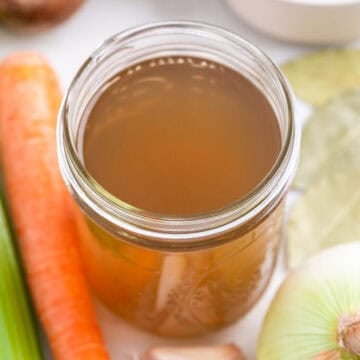
This homemade vegetable broth is simple, flavorful, and made without oil. You only need a handful of basic ingredients and one pot to make a broth that tastes so much better than store-bought. I make it all the time using whatever vegetables I have on hand, and it's a great way to keep things easy while still adding plenty of flavor to soups, stews, and other recipes.
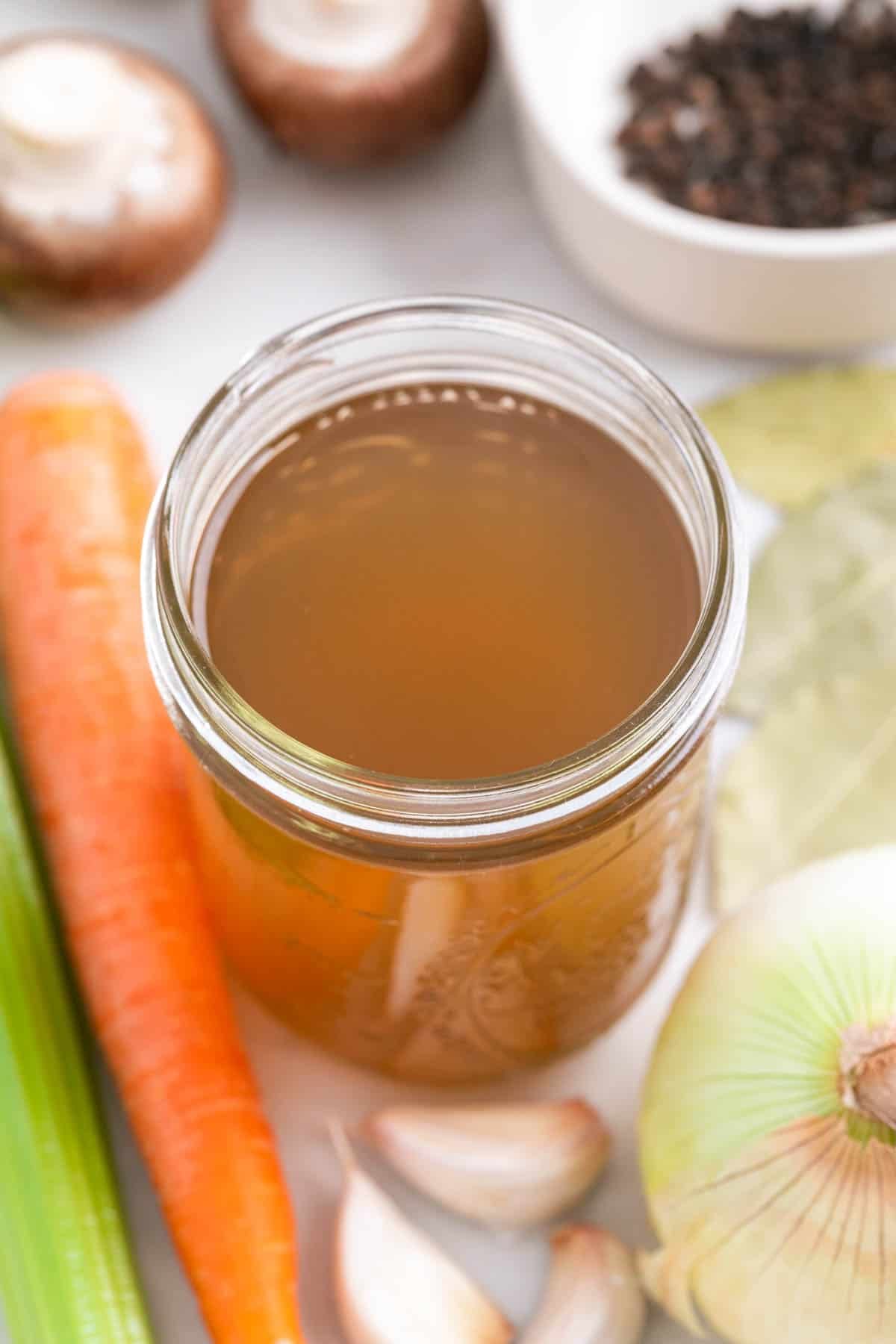
Making it couldn't be easier. There's no need to sauté anything, just add all the ingredients to a pot, bring it to a boil, and let it simmer. It's naturally oil-free and low in fat, and you can easily make it low sodium by reducing or skipping the salt altogether.
You can use it in so many different ways. It works great as a base for soups and stews, but you can also use it to cook grains like rice or quinoa, or to add extra flavor to sauces and other savory dishes. It's also perfect for meal prep, since you can make a big batch and keep it in the fridge or freezer to use throughout the week. It's a simple way to make everyday recipes taste better without much effort.
Having a few homemade staples like this vegetable broth in your kitchen can make everyday cooking much easier. You may also find my Vegan Beef Broth and Bouillon Powder and Seitan recipes useful, and my post on How to Cook Millet can come in handy too. These basics help you put together soups, stews, and bowls without overthinking it.
Why You'll Love This Homemade Vegetable Broth
Why this one is worth trying:
- Simple and hands-off: You just add everything to a pot and let it simmer, no sautéing or complicated steps needed.
- Light but full of flavor: It has a clean, savory taste that works perfectly as a base for soups, stews, and more.
- Made with everyday ingredients: It uses simple vegetables and pantry staples you probably already have at home.
- Easy to customize: You can adjust the salt or skip it altogether to make it low sodium.
- Great for meal prep: You can make a big batch, store it in the fridge or freezer, and use it throughout the week.
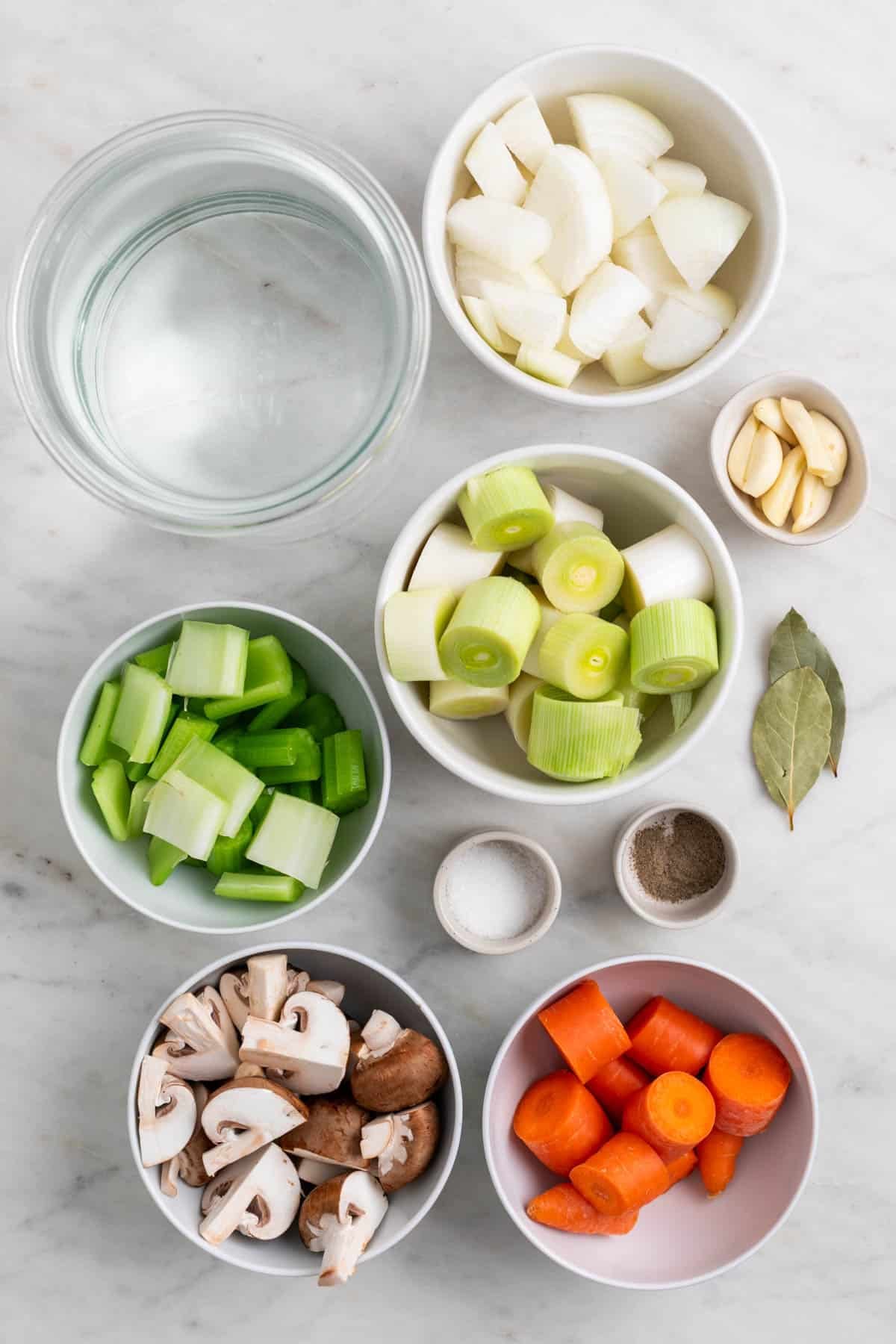
Homemade Vegetable Broth Ingredients
- Onion: Yellow onion works best, but white or red onion are fine too.
- Carrots: No need to peel if they're well washed, but you can peel them if you prefer.
- Celery: Brings depth and that classic broth flavor.
- Leek: Use the white and light green parts. You can substitute with more onion if needed.
- Garlic: Leave it whole or crush it slightly to release more flavor.
- Mushrooms: Bring umami. You can use any type or skip them if you don't have any.
- Bay leaves: Give extra depth of flavor, but you can skip them if you don't have any.
- Water: Add a little more or less depending on how concentrated you want the broth.
- Salt: Optional. Adjust to taste or skip for a low sodium version.
- Black pepper: Adds a subtle hint of spice, but you can omit it if you prefer.
Find the full recipe with exact measurements in the recipe card below.
How to Make Vegetable Broth
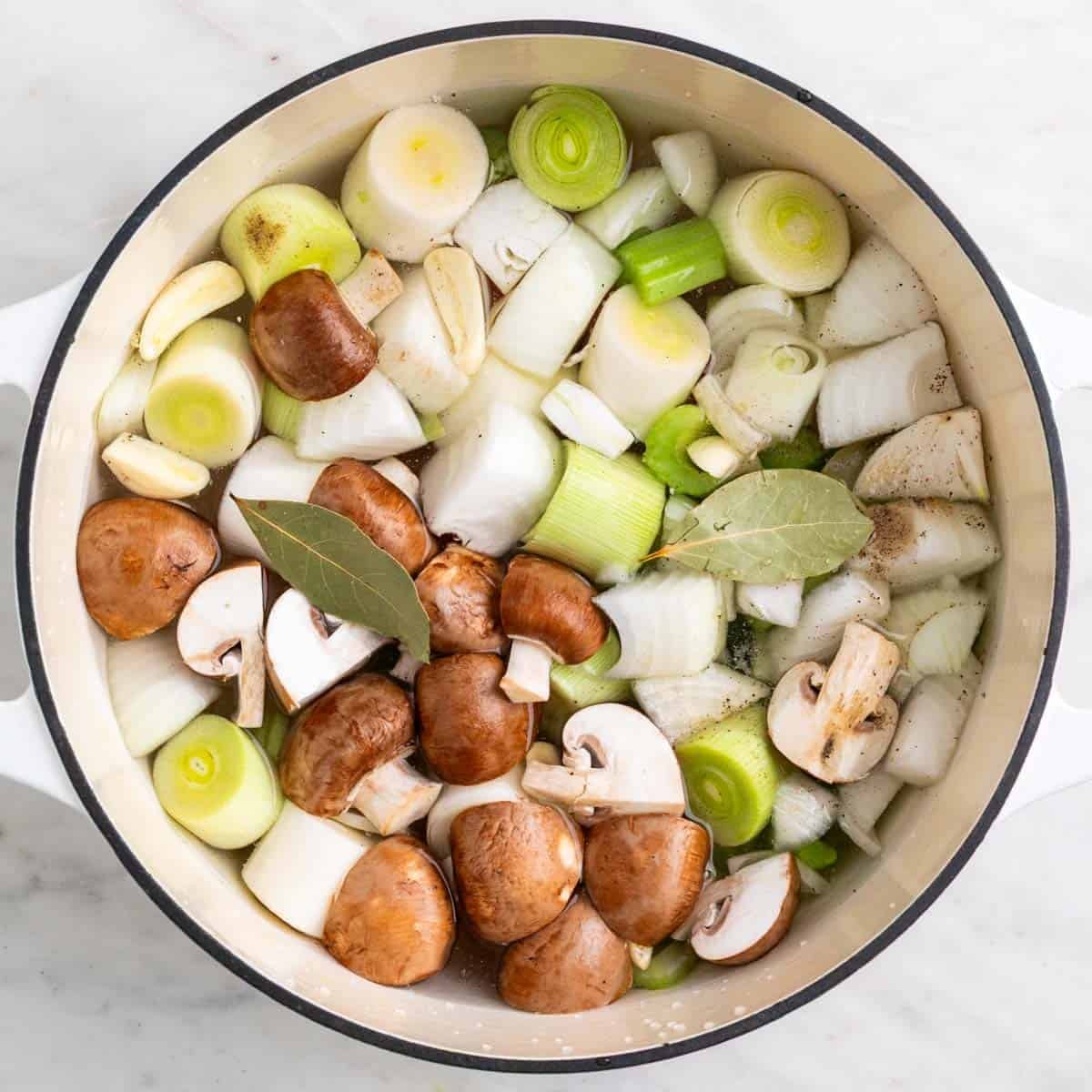
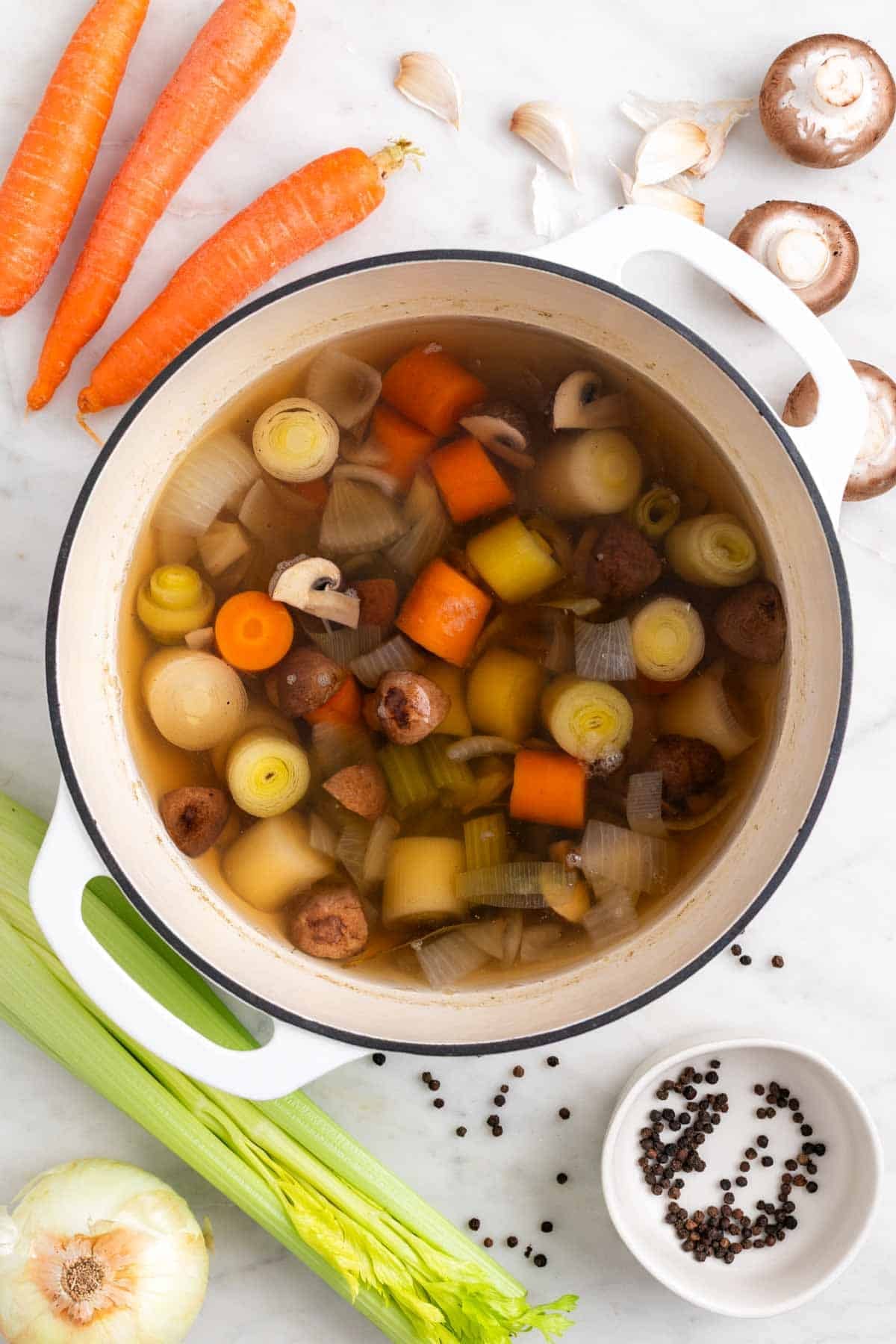
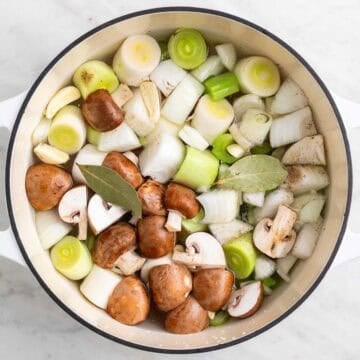
- Place all the ingredients in a large pot.
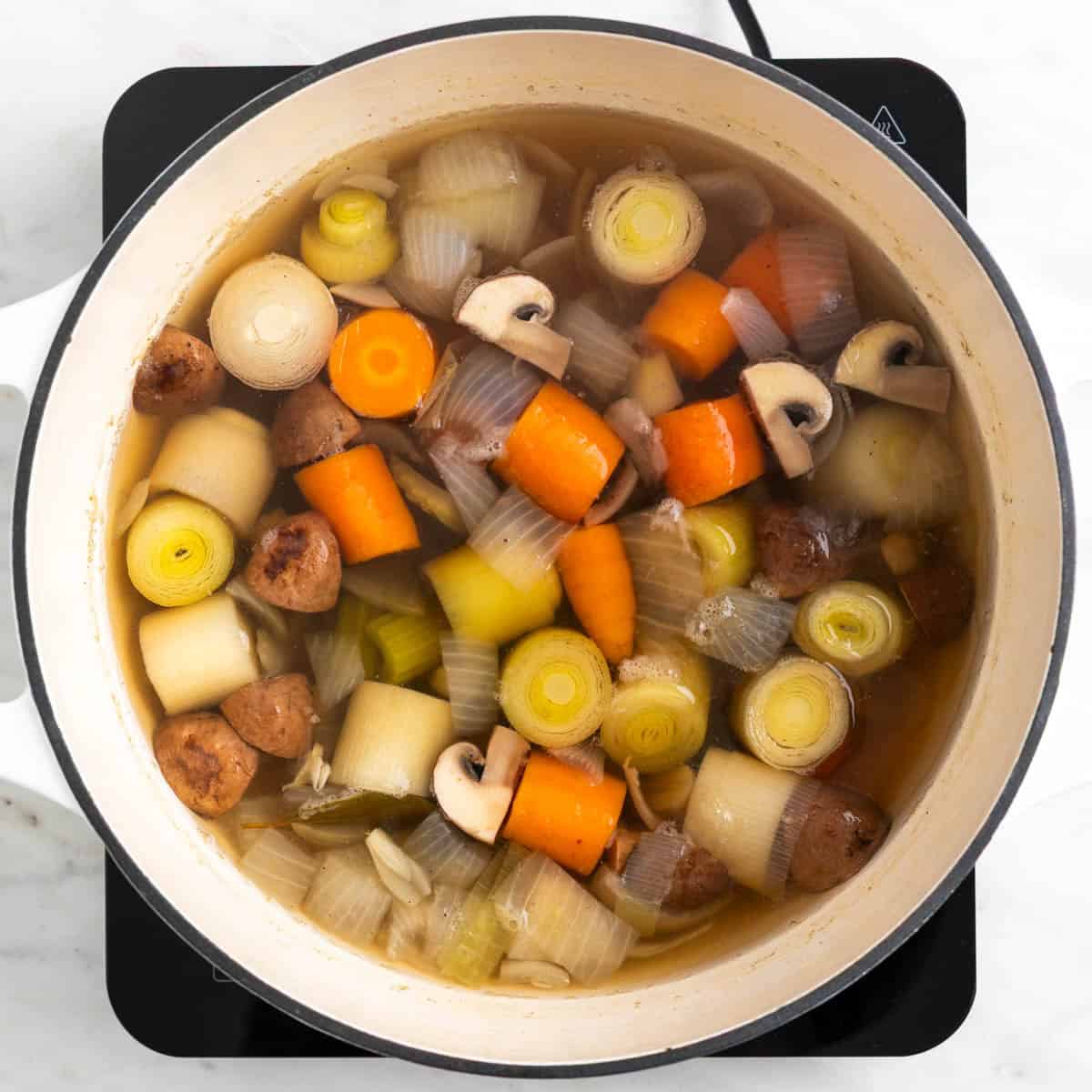
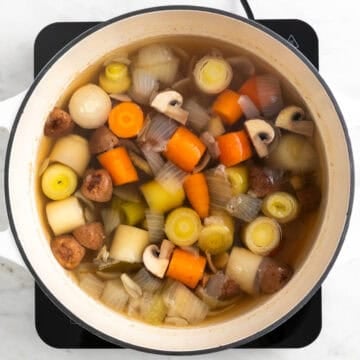
- Set it over high heat and bring it to a boil. Then lower the heat and let it simmer gently, partially covered, for 30 minutes to 1 hour depending on how strong you want the flavor. Keep it at a gentle simmer, not a rolling boil.
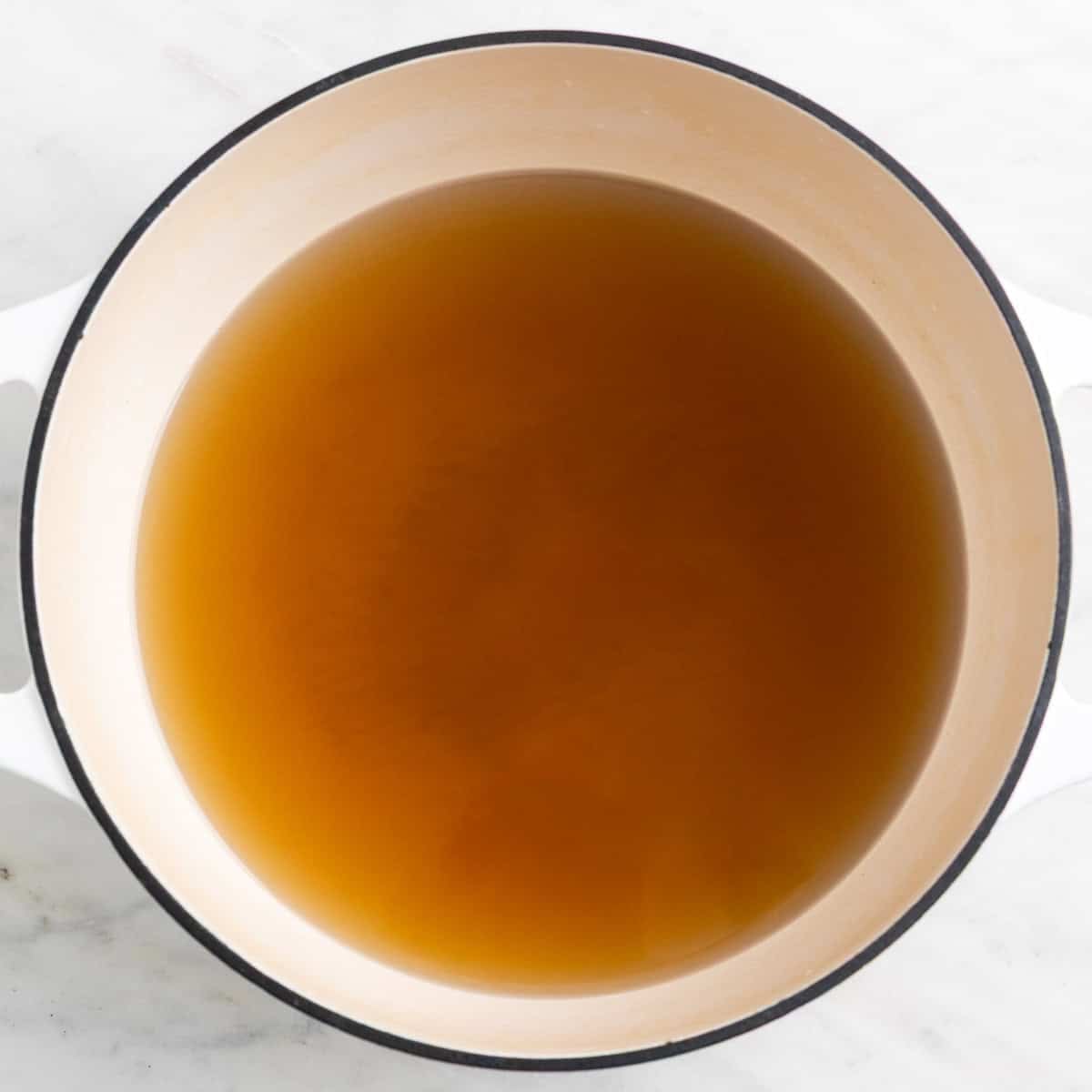
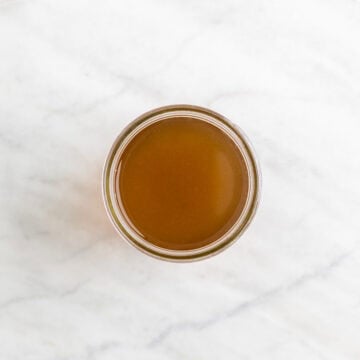
- Pour the broth through a strainer and remove the vegetables and bay leaves.
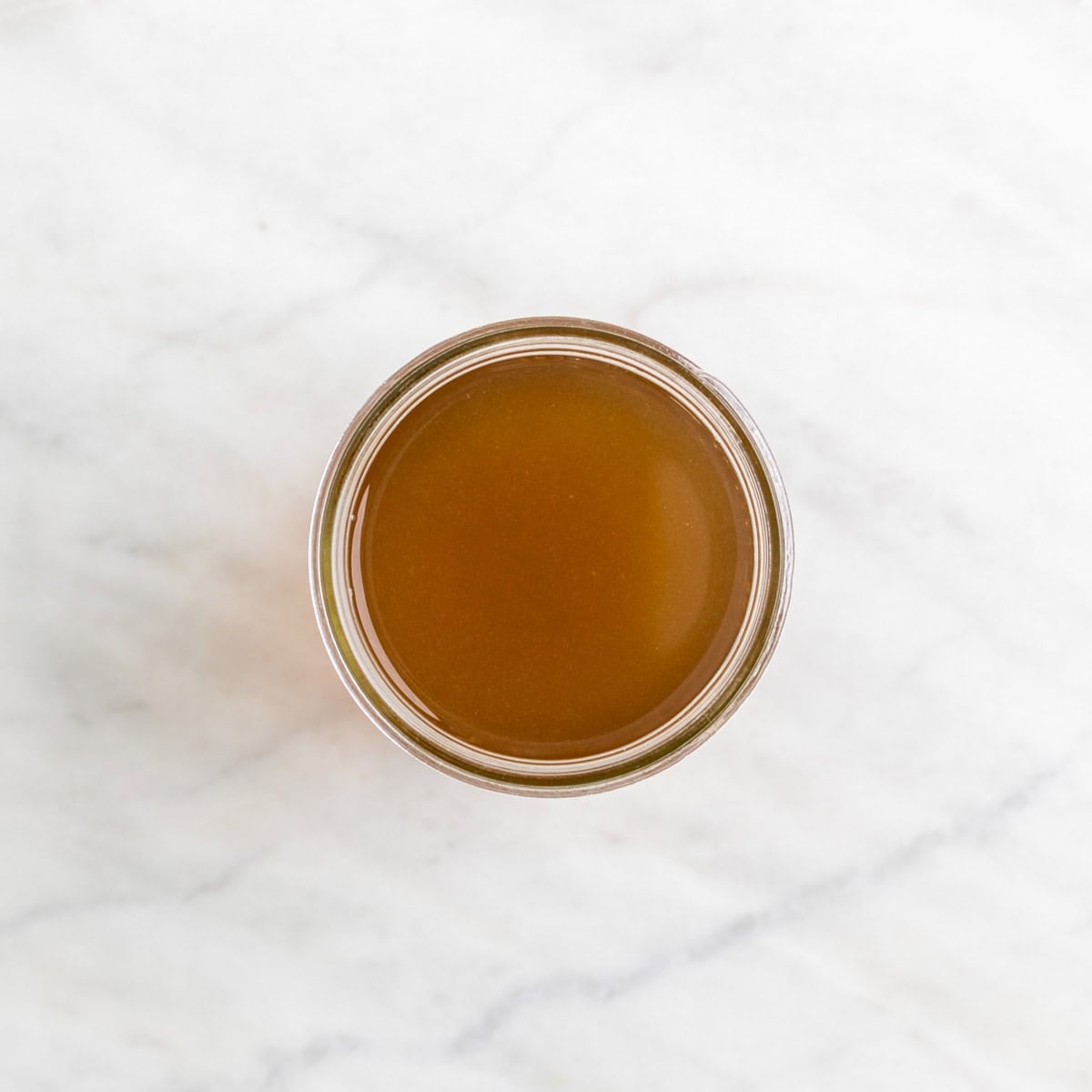
- Let it cool down a bit, then use it as needed or save it for later.
Tips for the Best Results
- Chop the vegetables roughly: There's no need to be precise, larger pieces work great and are easier to strain later.
- Use what you have on hand: This is a flexible recipe, so feel free to swap or add vegetables depending on what you need to use up.
- Don't overdo the salt: It's better to keep the broth lightly seasoned so you can adjust it later depending on the recipe.
- Simmer gently: Avoid a strong boil, as a gentle simmer helps develop a cleaner, better flavor.
- Let it cook longer for more flavor: 30 minutes is enough, but up to 1 hour will give you a deeper taste.
- Strain well: Use a fine mesh strainer or cheesecloth for a clearer broth.
Ways to Use It
Here are some simple ways to use it in your everyday cooking:
- Soups: Use it as a base for vegetable soups, lentil soups, or creamy soups.
- Stews: Perfect for hearty stews and comforting one-pot meals.
- Grains: Cook rice, quinoa, or other grains in it for extra flavor.
- Legumes: Great for cooking beans, lentils, or chickpeas from scratch.
- Sauces: Use it to build flavorful sauces or gravies.
- Risottos: Adds depth and richness to risotto-style dishes.
- Pasta dishes: Use it in place of water for more flavor.
- Stir-fries: Add a splash to deglaze the pan or create light sauces.
- Mashed vegetables: Use it instead of milk or butter for a lighter option.
- Meal prep: Keep it on hand to quickly build meals during the week.
How to Store and Reheat Leftovers
- Fridge: Let the broth cool completely, then store it in an airtight container in the fridge for up to 4-5 days.
- Freezer: You can freeze it for up to 3 months. I like to use freezer-safe containers or ice cube trays for smaller portions.
- Thaw: Transfer it to the fridge and let it thaw overnight, or warm it directly in a pot over low heat until fully melted.
- Reheat: Warm it in a pot over medium heat until hot. You can also reheat it in the microwave in short intervals, stirring in between.
- Tip: If the flavor tastes a bit stronger after storing, just add a splash of water to adjust it.
Frequently Asked Questions
No, there's no need to sauté anything. Just add everything to the pot, bring it to a boil, and let it simmer. It's a simple, oil-free method that still gives you plenty of flavor.
You can simmer it longer for a deeper flavor or add more aromatics like garlic, herbs, or spices. Reducing the broth slightly will also make it more concentrated.
You can easily make this broth low sodium by reducing or skipping the salt. This is a great option if you plan to use it in recipes that already include salty ingredients, as it gives you more control over the final flavor.
Yes, you can customize it with a wide variety of ingredients. Fresh herbs like parsley, thyme, or rosemary work really well, and things like fennel, green onions, or garlic tops can add extra depth. You can also use mushroom stems, corn cobs, tomato ends, or even a small piece of dried seaweed like kombu for more umami.
Whole spices such as peppercorns, coriander seeds, or a piece of ginger are great options too. Just keep the flavors balanced and avoid anything too bitter or overpowering.
The vegetables will be much softer and have a milder flavor after simmering, but you can still use them in a few simple ways. They work well blended into soups, mixed into purées, or added to dishes like rice or stews to avoid waste.
That said, since most of their flavor has already been extracted, they won't taste great on their own, so many people prefer to discard them.
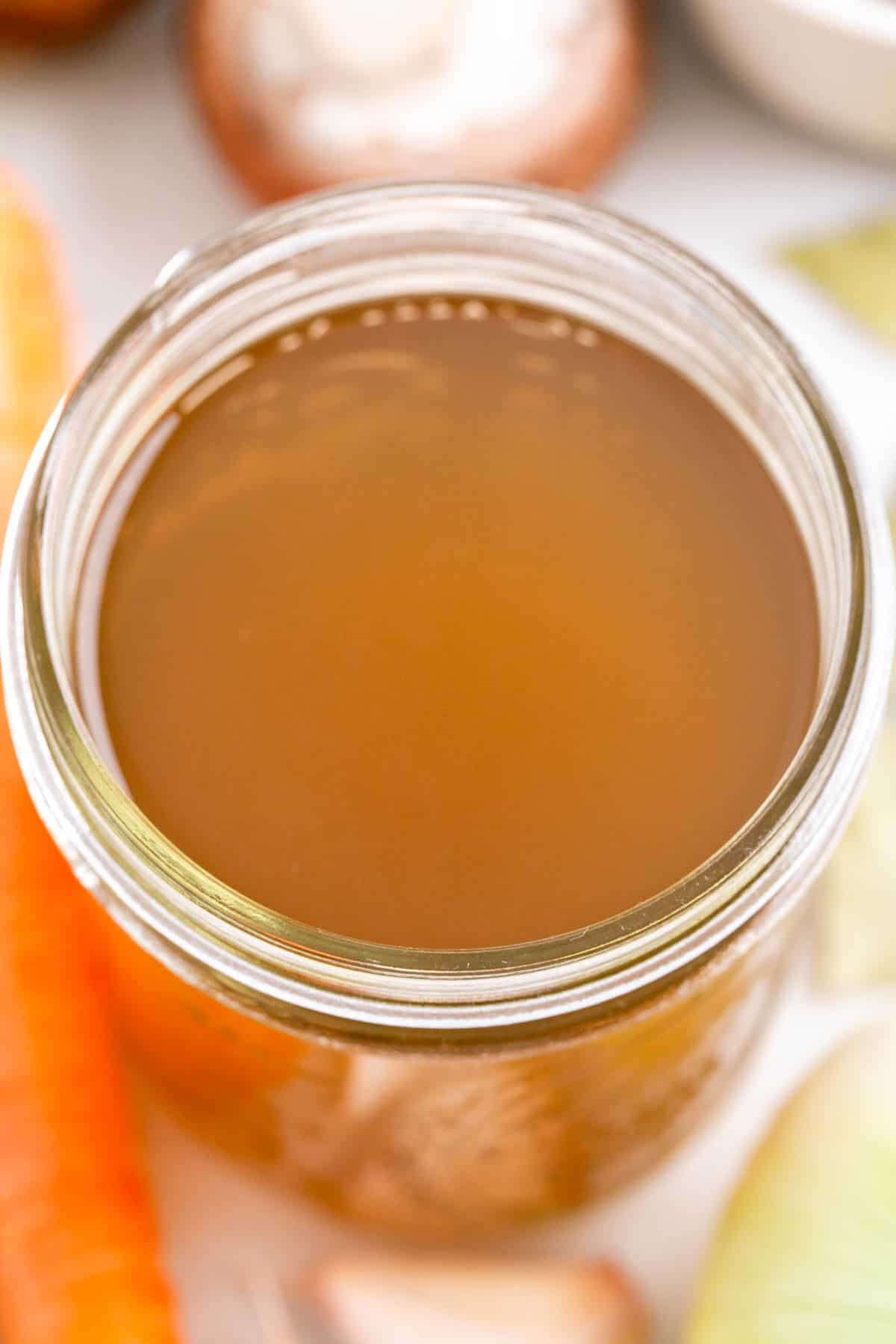
Recipes That Use This Vegetable Broth
Love it? Leave a rating!
Homemade Vegetable Broth
Ingredients
- 1 onion, roughly chopped
- 2 carrots, roughly chopped
- 2 celery stalks, roughly chopped
- 1 leek, roughly chopped
- 4 garlic cloves, peeled and halved
- 4 mushrooms, quartered
- 2 bay leaves
- 8 cups water
- 1 teaspoon salt, optional
- ¼ teaspoon black pepper
Instructions
- Add all the ingredients to a large pot.

- Bring to a boil over high heat, then reduce the heat to a gentle simmer. Partially cover the pot and cook for at least 30 minutes, or up to 1 hour for more flavor. Avoid a rapid boil to prevent excessive reduction.
- Strain the broth and discard the vegetables and bay leaves.
- Let it cool, then use as needed or store for later.

Notes
- Let it cool completely before storing.
- Store it in an airtight container in the fridge for up to 4-5 days.
- Freeze it in freezer-safe containers or ice cube trays for up to 3 months.
- Thaw it in the fridge overnight or reheat it directly on the stove.
- Reheat gently over medium heat until warmed through.


Albert Tan says
Amazing!
Iosune Robles says
Hi Albert! Thank you so much 😊 I’m so glad you enjoyed it!
Ann says
I'm a little late finding this recipe, but I want to stop buying store vegetable stock. This seems easy. Could I make it in an Instant Pot? How long would I set it for?
I have recently started cooking without any salt added, and then either add at the very end or let each person add their own salt. I also use a mild miso at the end of soups to give it flavor without salt. I find I am adding less and less salt to my food at the table.
Can I use dried mushrooms? I always have some on hand and just soak in hot water, drain, and use the soaking water as broth.
Iosune Robles says
Hi Ann! Thank you so much 😊 Yes, you can definitely make it in the Instant Pot. I’d probably cook it on high pressure for about 20 to 30 minutes and then let the pressure release naturally.
And yes, dried mushrooms work great in vegetable broth! They add lots of flavor, especially if you use the soaking liquid as part of the broth. Your idea of using mild miso at the end sounds delicious too!
cindy says
hello and i want to tell you how much i ENJOY your recipes!!!
i glad to see your vegetable broth.
just a thought....i gather in a glass jar fill with ALL my carrot ends, peelings, cabbage leaves, ends of onions ,peelings and pieces of all my veggies. fill the jar then boil all that down for broth. i keep the jar in the back of my frig and fill it as i go.
Iosune Robles says
Hi Cindy! Thanks for your suggestion 🙂 Have a nice day!
Dave Pressman says
Iosune: I hate to use salt because of the sodium. I tend to have high BP. Are you aware of any salt substitutes that are sodium-free that don't have a chemical taste?
Iosune Robles says
Hi Dave! I have no idea about that, sorry! I think that the best option is to don't use it instead of search for a substitute. Have a nice day 🙂
Ivelisses Perez-McGee says
I'm going to the store in a few minutes so I can buy a few more ingredients.
My stomach has been sore for a few days. This soups sounds like what I need.
Thanks!
Liz says
Delicious. I needed 8 cups for a butternut squash soup, so I doubled the recipe and had some left over. Much better flavor than a commercial vegetable broth.
Iosune says
Hi Liz! So glad you liked it 🙂
Leire says
Hi! What would you suggest for the leftover veggies?
Thanks
Iosune says
Hi Leire! You can blend them with some stock, water or plant milk and some spices to make a creamy soup. I also add some fresh veggies to make the soup tastes even better 🙂
Lili says
Thank you for replying Iosune
I found this website that elaborates on the difference of broth & stock.
I thought someone may find it helpful.
http://www.finecooking.com/article/vegetable-stock-really
Iosune says
Hi Lili! Thanks a lot for sharing 🙂
Lili says
What is the difference between your vegetable stock in your vegetable broth?
Iosune says
Hi Lili! This recipe is oil-free 🙂
JOSIE says
I make my own broth with all the leftovers from veggies (outer leaves of leeks, carrot tops, heart of cauliflower). I put them in the freezer & when I have enough I cook them in the slow cooker. I like your idea of adding garlic. Will try that next time.
Iosune says
Hi Josie! That's a great idea, thanks a lot 🙂
Alexandre says
And again, you come to the rescue. I was just learning how to make Seitan and you provide me with the perfect vegetable broth to do it. I'm still a little conflicted, though, because I'm an atheist, and I don't believe in Seitan and none of those fairy tales...
Iosune says
Hi Alexandre! Hahaha, so glad you like our recipe 🙂 I've only made seitan once and it was a disaster, but I'd like to share a recipe on the blog... Hope it works better the next time. Have a nice day!